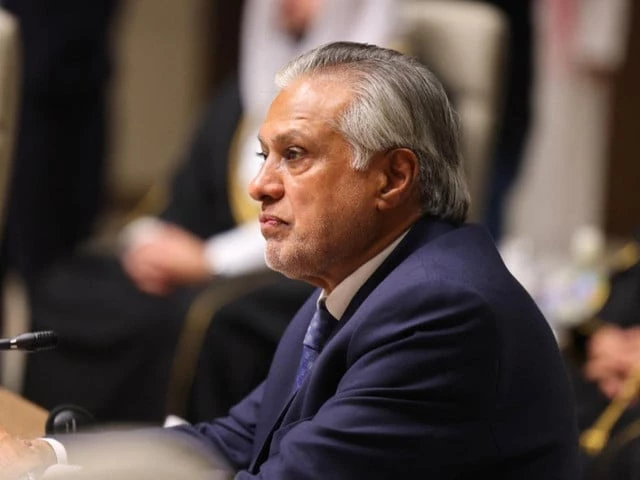
Pakistani Foreign Minister Ishaq Dar clarifies his country's stance on the Abraham Accords, emphasizing its commitment to a Palestinian state.
US Secretary of State Marco Rubio met with his Pakistani counterpart, Foreign Minister Ishaq Dar, at the State Department in Washington. The meeting came days after Rubio’s visit to India and aimed to discuss ongoing negotiations for peace between the United States and Iran. During the bilateral meeting, both officials expressed satisfaction over the positive momentum in Pakistan-US relations and agreed to strengthen cooperation in areas such as trade, security, and counterterrorism.
Rubio acknowledged Pakistan's "sincere diplomatic and mediatory efforts" for regional stability. Dar conveyed his country’s concerns regarding terrorist activities from Afghan soil and highlighted the need for enhanced counter-terrorism collaboration. He expressed confidence that Pakistan’s continued efforts would yield positive results in de-escalating tensions with India, citing President Trump and Secretary Rubio as key figures in last year's conflict resolution.
In a post on X, Rubio thanked Dar for Pakistan's role in advancing peace in the Middle East. Both leaders agreed to further strengthen their partnership, emphasizing shared goals of security and prosperity. The US State Department also commended Pakistan’s mediation efforts with Iran and expressed condolences over recent terrorist attacks.
Despite these positive developments, Dar firmly rejected any notion of Pakistan joining the Abraham Accords, stating that there would be "no flexibility" in Islamabad's position until Palestine is recognized as an independent state based on pre-1967 borders. This stance aligns with Pakistan’s long-standing support for a Palestinian state and its commitment to the two-state solution.
In response to US President Donald Trump’s recent statements, Dar reiterated that Pakistan would not recognize Israel unless the two-state solution is accepted. He emphasized that signing the Abraham Accords would mean abandoning Pakistan's longstanding demand for an independent Palestine with Al-Quds Al-Sharif as its capital based on pre-1967 borders.
The meeting underscored the importance of continued dialogue and cooperation between Pakistan and the United States, particularly in addressing regional challenges and promoting peace.