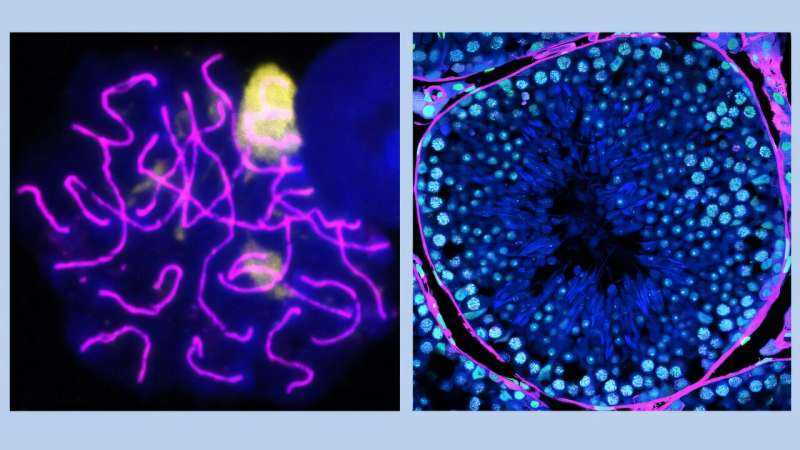
Researchers at Universitat Autònoma de Barcelona and the Josep Carreras Leukemia Research Institute have identified Sirtuin 7 (SIRT7) as a key factor in maintaining male fertility over time, published in Nature Communications.
A groundbreaking study led by researchers from the Universitat Autònoma de Barcelona (UAB), the Josep Carreras Leukemia Research Institute (IJC), and Rutgers University has identified Sirtuin 7 (SIRT7) as a critical protein for maintaining the genome stability of male germ cells over time. The findings, published in the prestigious journal Nature Communications, shed new light on how male fertility can decline with age.
The study involved extensive research conducted on mice, revealing that SIRT7 plays an essential role in safeguarding genetic material within sperm cells. This discovery could have significant implications for understanding and potentially addressing male infertility issues as men age.
Previously, the focus of research has often been on other proteins and factors related to fertility. However, this study highlights the importance of SIRT7, which had not been widely considered a key player in maintaining genetic stability within germ cells. The researchers found that reduced levels of SIRT7 led to increased genomic instability, thereby accelerating the decline in male fertility.
Dr. Maria Sanchez, one of the lead researchers from UAB, explained, "Our findings suggest that targeting SIRT7 could be a potential therapeutic approach for preserving male fertility as men age." This opens up new avenues for developing treatments and interventions aimed at maintaining or restoring male reproductive health over time.
The implications of this research extend beyond just understanding the biological mechanisms behind aging sperm cells. It also has broader applications in fields such as assisted reproduction, where knowledge about SIRT7 could help improve techniques and outcomes for individuals facing fertility challenges due to age-related factors.
In conclusion, the identification of Sirtuin 7 (SIRT7) as a key factor in maintaining male fertility over time marks an important advancement in reproductive biology. This discovery not only enhances our understanding of how genetic stability is maintained within sperm cells but also paves the way for potential new treatments and interventions to address age-related declines in male fertility.