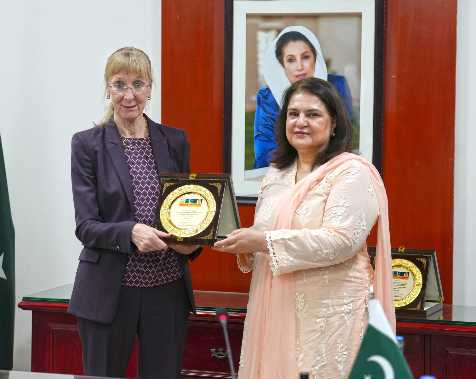
Senator Rubina Khalid and German Ambassador Ina Lepel inaugurated seven new MRVs for social protection services, enhancing access for vulnerable communities.
BISP and Germany have launched seven new Mobile Registration Vans (MRVs) to expand outreach and provide essential social protection services to vulnerable communities in remote areas. The initiative was officially inaugurated by Senator Rubina Khalid, Chairperson of the Benazir Income Support Programme (BISP), and Ina Lepel, Ambassador of the Federal Republic of Germany to Pakistan.
These state-of-the-art MRVs are equipped with advanced technology and facilities that allow for efficient registration processes. They will travel extensively across Pakistan, ensuring that even the most remote areas can access vital social services such as income support, education assistance, and healthcare benefits. The move is part of a broader strategy by BISP to bridge the gap in service delivery and ensure no community is left behind.
The launch underscores the strong collaboration between BISP and Germany, which has been instrumental in supporting various social welfare programs in Pakistan. Ambassador Lepel expressed her country's commitment to working with BISP to enhance the lives of vulnerable citizens through innovative solutions like these mobile vans. "These MRVs are a testament to our shared vision of creating an inclusive society where everyone has access to essential services," she said.
Senator Khalid highlighted the significance of this initiative, stating, "The introduction of these MRVs will significantly improve our reach and impact on the lives of millions of Pakistanis who need our support the most. We are grateful for Germany's continued partnership in making this possible."
With these new vans, BISP aims to register thousands of beneficiaries and provide them with timely assistance. The mobile units will operate in areas where traditional service delivery faces challenges due to geographical constraints or limited infrastructure.
The launch marks a crucial step towards achieving BISP’s mission of poverty alleviation and social inclusion. By leveraging modern technology and strategic partnerships, the programme is poised to make a substantial difference in the lives of those who need it most.