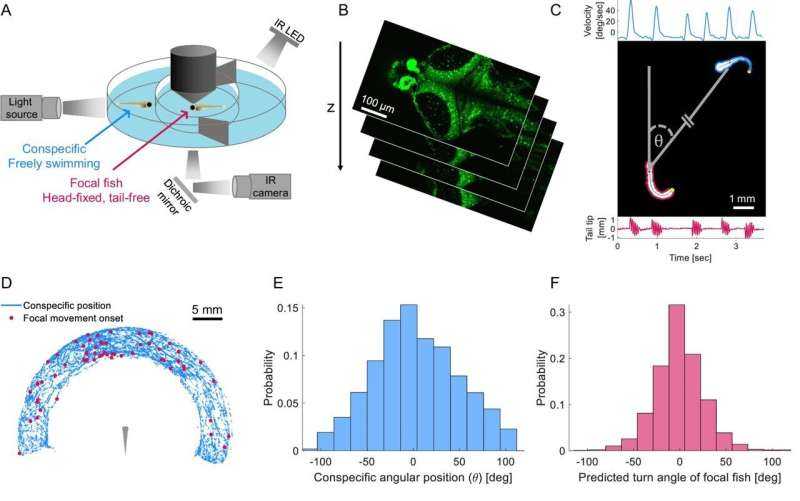
Researchers discover brain activity linked to social behavior starts before movement, with a key role for the pallium, a higher brain region, in predicting social interaction and drive.
The human brain is a complex and dynamic entity, and one of its most fascinating aspects is its ability to predict and prepare for social interactions. Recent research has shed light on this phenomenon, revealing that coordinated brain activity linked to social behavior begins seconds before movement starts. This suggests that the brain is actively preparing for social interaction before it even begins, and that this preparation is closely tied to an individual's social drive.
In a groundbreaking study, researchers used zebrafish as a model organism to investigate the neural mechanisms underlying social behavior. By analyzing brain activity in these animals, they identified a key role for the pallium, a higher brain region that is required for normal social interaction. The pallium is a critical component of the brain's social cognition network, and its activity is closely tied to an individual's ability to engage in social behavior.
The study found that animals with a stronger brain-wide neural signature were more socially engaged overall, suggesting that the strength of this signature reflects an individual's social drive. This is a significant finding, as it suggests that the brain's preparation for social interaction is closely tied to an individual's motivation to engage with others. Furthermore, the fact that this preparation begins before movement starts suggests that the brain is actively anticipating and preparing for social interactions, rather than simply responding to them.
The implications of this research are far-reaching, and could have significant implications for our understanding of social behavior and social cognition. By elucidating the neural mechanisms that underlie social interaction, researchers may be able to develop new treatments for social disorders, such as autism and social anxiety disorder. Additionally, this research could provide insights into the neural basis of social behavior, and could help to explain why some individuals are more socially engaged than others.
Overall, the findings of this study provide a fascinating glimpse into the neural mechanisms that underlie social behavior, and suggest that the brain is actively preparing for social interaction before it even begins. As researchers continue to explore this phenomenon, they may uncover new insights into the complex and dynamic nature of the human brain, and may develop new treatments and therapies for social disorders.