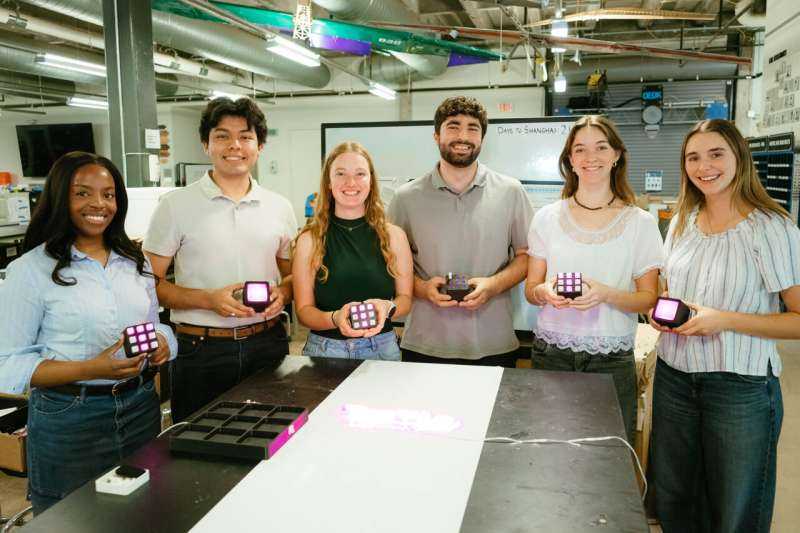
Rice University engineering students have developed TacTile, an innovative rehabilitation system that makes stroke recovery more engaging and effective through interactive gameplay.
A team of Rice University mechanical and electrical engineering students has revolutionized stroke rehabilitation with the creation of TacTile, a groundbreaking interactive, modular system. Designed to make home-based recovery sessions more engaging and adaptable, TacTile stands out as a significant advancement in patient care. The project was developed within Rice's Oshman Engineering Design Kitchen (OEDK) and recently won top honors at the HUFF OEDK Engineering Design Showcase.
The TacTile system is modular, allowing for personalized therapy sessions that can be tailored to individual needs. By integrating interactive gameplay elements, patients are encouraged to participate more actively in their recovery process. This approach not only enhances patient motivation but also provides a fun and engaging environment that can make the rehabilitation journey less daunting.
At the recent HUFF OEDK Engineering Design Showcase, TacTile was recognized for its outstanding innovation, earning first place in the prestigious Willy Revolution Award. The project's success underscores the potential of interdisciplinary collaboration in developing effective medical solutions. By combining engineering expertise with patient-centered design principles, these Rice students have created a tool that could significantly improve the quality and effectiveness of stroke rehabilitation at home.
The development of TacTile highlights the innovative spirit within educational institutions like Rice University, where students are encouraged to think outside the box and apply their skills to real-world problems. As this technology continues to evolve, it has the potential to transform how patients approach their recovery journeys, making the process more enjoyable and ultimately more successful.