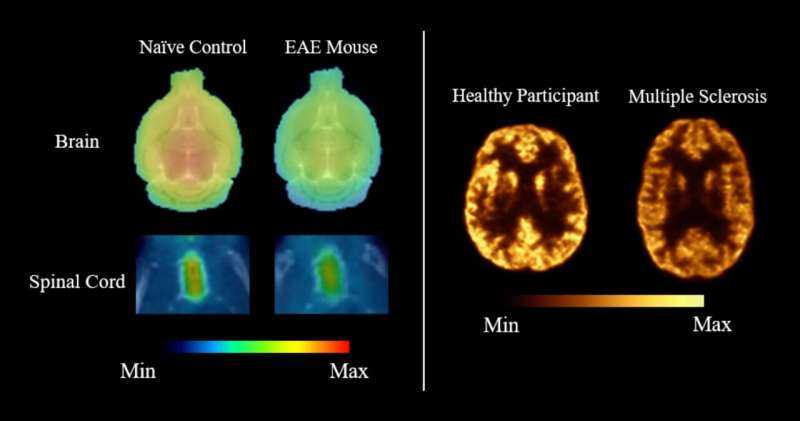
A groundbreaking PET imaging technique has been developed to quantify synaptic density in the spinal cord, offering a novel approach to assessing the brain's functional connections in patients with multiple sclerosis. This innovative method provides a personalized perspective on the disease's impact on the brain's wiring, allowing physicians to track the progression of multiple sclerosis and evaluate the effectiveness of new treatments in protecting or restoring these vital connections.
The research, presented at the Society of Nuclear Medicine and Molecular Imaging's 2026 Annual Meeting, highlights the potential of PET imaging to revolutionize the management of multiple sclerosis. By measuring synaptic density, physicians can gain a deeper understanding of the disease's effects on the brain and develop more targeted treatment strategies. This personalized approach could lead to more effective disease management and improved patient outcomes.
The use of PET imaging to assess synaptic density in multiple sclerosis patients represents a significant advancement in the field. Traditional imaging techniques have limitations in detecting the subtle changes in brain connectivity that occur in multiple sclerosis. In contrast, PET imaging provides a quantitative and sensitive measure of synaptic density, enabling researchers to monitor disease progression and treatment response with greater accuracy.
The implications of this research are far-reaching, with potential applications in both preclinical and human studies. By leveraging PET imaging to assess synaptic density, researchers can gain valuable insights into the underlying mechanisms of multiple sclerosis and develop more effective treatments. As the field continues to evolve, the use of PET imaging is likely to play an increasingly important role in the diagnosis, monitoring, and treatment of this debilitating disease.
In conclusion, the development of PET imaging techniques to measure synaptic density in multiple sclerosis patients represents a major breakthrough in the field. With its potential to provide personalized information on disease progression and treatment efficacy, this innovative approach is poised to transform the management of multiple sclerosis and improve patient outcomes. As research in this area continues to advance, it is likely that PET imaging will become an essential tool in the fight against this complex and debilitating disease.