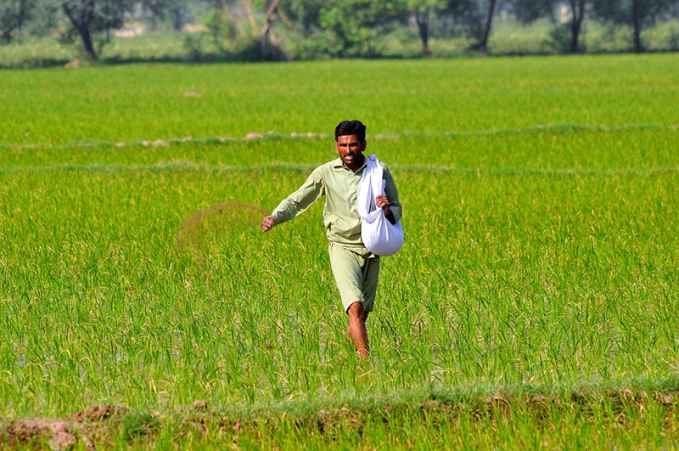
A farmer engages in routine crop management by spreading fertilizer in a rice field to promote healthy growth and maximize yields during the growing season.
The application of fertilizer is a crucial aspect of crop management, particularly during the growing season. Farmers take great care to ensure that their crops receive the necessary nutrients to thrive. In a rice field, a farmer can be seen spreading fertilizer as part of this routine process. This practice is essential for promoting healthy growth, increasing crop yields, and ultimately contributing to a successful harvest.
The use of fertilizer in rice fields has become a standard practice in agricultural communities. It provides the crops with the necessary nutrients, such as nitrogen, phosphorus, and potassium, which are essential for growth and development. By applying fertilizer at the right time and in the right amount, farmers can help to create an optimal environment for their crops to flourish.
In addition to promoting healthy growth, the application of fertilizer can also help to improve the overall quality of the crops. For example, fertilizer can help to increase the protein content of rice, making it more nutritious for consumption. Furthermore, the use of fertilizer can also help to reduce the environmental impact of farming by reducing the need for multiple plantings and minimizing soil erosion.
The process of spreading fertilizer in a rice field requires careful planning and attention to detail. Farmers must take into account factors such as the type of fertilizer being used, the amount of fertilizer needed, and the timing of application. By doing so, they can help to ensure that their crops receive the necessary nutrients to thrive, while also minimizing the risk of over-fertilization or other negative environmental impacts.
As the growing season progresses, the importance of proper crop management becomes increasingly clear. By engaging in routine practices such as the application of fertilizer, farmers can help to promote healthy growth, increase crop yields, and contribute to a successful harvest. The end result is not only beneficial for the farmers themselves but also for the broader community, as it helps to ensure a stable food supply and support local economies.